
Your Chiller Plant
Doesn't Waste
Energy.It Loses Engineering.
Rising electricity bills are rarely caused by a single machine. They result from hundreds of small engineering losses occurring across chillers, pumps, cooling towers, controls and hydraulic systems. RHYDAK identifies where those losses originate, quantifies their impact and provides engineering-backed actions that improve efficiency, reliability and lifecycle performance.
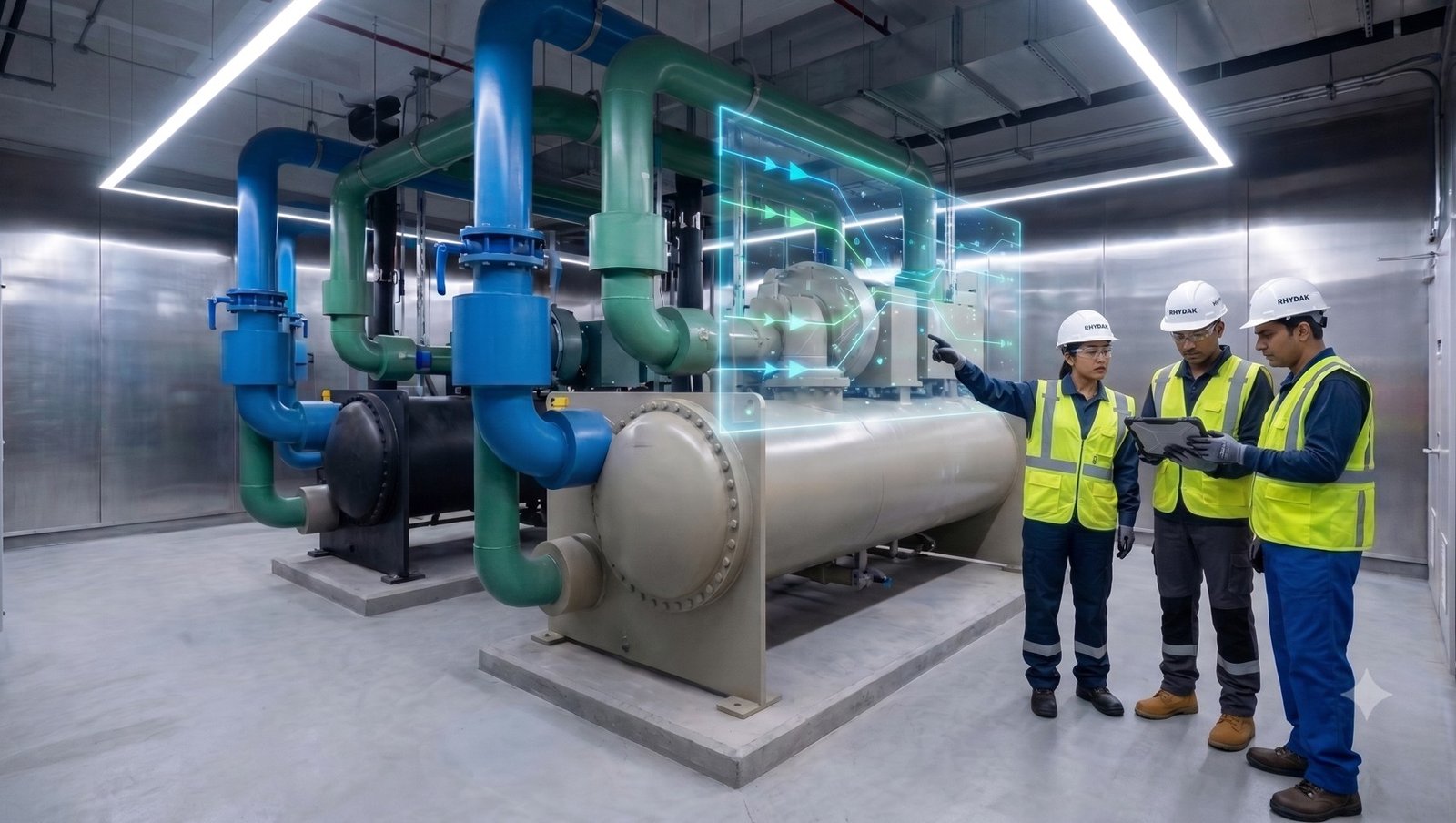
Most Chiller Plants Don't Suddenly Fail. They Slowly Drift Away From Design Performance.
A plant rarely loses 25% efficiency overnight. Performance gradually deteriorates due to fouled heat exchangers, poor condenser water conditions, hydraulic imbalance, improper sequencing, degraded controls, sensor inaccuracies and changing operating conditions. Because these losses develop slowly, they often become the plant's new "normal."
The result is higher electricity consumption, reduced cooling capacity, frequent operator intervention, unexpected failures and expensive capital replacement decisions that could have been avoided.
Performance Begins to Drift
Plant efficiency gradually reduces. Operators compensate by changing setpoints, running additional equipment or increasing operating hours.
Energy Consumption Increases
Electricity bills rise, yet individual equipment appears to be operating "normally." The real engineering losses remain hidden.
Wrong Decisions Follow
Plants invest in new chillers, larger pumps, additional cooling towers or expensive retrofits before identifying the real root cause.
Measure. Diagnose. Quantify. Then Recommend.
Engineering decisions should be based on measured operating conditions, thermodynamic analysis and quantified performance losses— not assumptions.
Every Plant Tells a Story. We Decode It.
Instead of checking equipment individually, RHYDAK analyses how every component interacts with the entire cooling system to uncover the true causes of energy loss, low capacity and poor reliability.
Chiller Performance
- ✓ Actual kW/TR
- ✓ COP & IPLV assessment
- ✓ Compressor loading profile
- ✓ Evaporator performance
- ✓ Condenser performance
- ✓ Refrigerant health
- ✓ Superheat & Subcooling
- ✓ Lift analysis
Hydronic System
- ✓ Chilled water ΔT
- ✓ Condenser water ΔT
- ✓ Flow imbalance
- ✓ Pump performance
- ✓ Bypass flow
- ✓ Hydraulic bottlenecks
- ✓ Pressure losses
- ✓ Water distribution
Entire Plant
- ✓ Cooling tower effectiveness
- ✓ Plant sequencing
- ✓ Control logic review
- ✓ Sensor validation
- ✓ VFD operation
- ✓ Operating strategy
- ✓ Energy benchmarking
- ✓ Root cause identification
Performance cannot be explained using a single KPI. RHYDAK correlates more than sixty operating parameters across the refrigeration cycle, heat exchangers, hydronic network, cooling towers and control systems to identify the engineering root cause before recommending corrective actions.
What Plant Teams Think vs What Actually Causes Energy Loss
Most facilities spend months fixing symptoms. Engineering audits uncover the actual problem.
The chiller is old.
We need a bigger chiller.
Cooling tower isn't working.
Compressor efficiency has dropped.
Power bills are unavoidable.
Poor condenser heat rejection
Hydraulic imbalance
Incorrect sequencing logic
Operating outside design envelope
Avoidable energy waste hidden in daily operation
If You Answer "Yes" To Even One, Your Plant Is Asking For An Audit.
You don't need a plant failure to justify an engineering audit. Most performance losses remain hidden until they become expensive.
Electricity bills keep increasing
Cooling demand is not being met
Additional chillers are running more often
Plant kW/TR is worsening every year
Maintenance costs continue to rise
If any of these sound familiar, an engineering audit is likely to deliver more value than replacing equipment blindly.
A Structured Engineering Engagement
Every audit follows a structured engineering process designed to minimise disruption while delivering measurable insights.
Discovery Call
Understand your plant configuration, operating challenges and performance objectives.
Site Audit
Engineering measurements, operating data collection and complete plant evaluation.
Engineering Analysis
Root cause investigation, performance calculations, benchmarking and opportunity identification.
Executive Presentation
Presentation of findings, recommendations, implementation priorities and expected business impact.
Questions Every Plant Manager Wants Answered
A Plant Performance Audit is not just about collecting data. It's about answering the questions that affect operating cost, reliability and future investment decisions.
Most Chiller Plants Lose Energy Without Anyone Realizing It
Small performance issues accumulate every day into higher electricity bills, reduced cooling capacity, unnecessary compressor loading and expensive failures. Most facilities continue operating this way simply because the real engineering cause remains hidden.
Electricity Bills Keep Increasing
- • Plant kW/TR keeps increasing every year
- • Energy consumption higher than design
- • No clear explanation for rising power cost
- • Existing BMS only reports data—not engineering causes
Cooling Performance Is Reducing
- • Rooms fail to achieve required temperature
- • Low chilled water ΔT
- • Poor load handling during peak demand
- • Operators compensate by running additional chillers
Maintenance Costs Continue Rising
- • Repeated compressor alarms
- • Frequent tube cleaning
- • Unexpected shutdowns
- • Problems return even after servicing
If you identified even two of these symptoms, your plant is probably losing significantly more energy than necessary.
An engineering audit separates symptoms from root causes by evaluating the complete cooling system—not just individual equipment.